Smart metering solution designed for use across Africa captures key utilities data
GridsMesh’s DECT NR+ smart metering solution provides reliable transmission over a Wirepas RF mesh network
As of 2025, approximately 600 million people—nearly half the population of Africa—still lack reliable access to electricity[1]. And, with more than 30 countries across Africa experiencing regular power shortages and interruptions in service[2], the continent continues to face significant barriers to achieving universal energy access. Improved data visibility allows utilities to better manage the grid and identify issues quickly and efficiently.
“Utility providers across Africa are gradually moving towards the implementation of smart metering solutions,” explains Joseph Wamicha, CEO, GridsMesh (formerly Sustainable Energy Technologies) – a South African design and manufacturing company that has developed a smart metering solution for use in Africa. “Currently, most utilities are using cellular connectivity as a means of transmitting the recorded data, while others are opting for Power Line Communication [PLC G3].”
Cellular-based meters enable long-range communication with base stations, which then transmit data to the Cloud. However, this method relies on SIM cards, which can be challenging to manage at the scale required for smart metering solutions. Additionally, widespread connectivity blackspots across Africa can disrupt data transmission.
Power Line Communication (PLC) provides an alternative, using existing electrical wiring to send metering data to Data Concentrator Units (DCUs), which then forward it to the Cloud. But this approach also faces limitations, including poor signal quality and interference from ageing infrastructure. Frequent power outages, both scheduled and unscheduled, further impact communication reliability – especially since meters can take a considerable amount of time to reconnect once power is restored.
“The foundation of smart metering is built upon dependable communication,” says Wamicha. “The broad range of wireless technologies available today – including LTE, NB-IoT, PLC G3, PLC+RF and Wi-SUN – provides utilities with many options. However, we have found that none of these are currently able to deliver the level of reliability required for effective smart metering across Africa.”
Reliable connectivity through mesh networking
To help meet these needs, GridsMesh has designed the ‘Pawane Energy App for Africa’, a smart metering solution based on DECT NR+ (NR+), using a Wirepas RF mesh network. Operating independently of traditional telecom providers, this mesh technology offers significantly lower operational costs while delivering the high reliability required for large-scale deployments. The decentralized, self-healing design eliminates single points of failure, ensuring consistent performance even if individual nodes go offline.
“Many areas, particularly in Africa, suffer from poor cellular network coverage,” says Wamicha. “With NR+, smart meters extend and strengthen wireless network coverage. In urban environments each smart meter can connect with over 50 neighboring meters, and a singular cellular subscription can be shared across 1,000 smart meters.”
The solution is powered by a Network Interface Card (NIC) featuring Nordic’s nRF9151 low-power module, which has been purpose-built for DECT NR+ and cellular IoT applications. Supporting the Wirepas NR+ stack, it enables secure, scalable data transmission across the network. NR+ technology allows utilities to operate their own private 5G network – eliminating the need for base stations or SIM cards. In addition, the module features 1 MB of non-volatile memory and 256 KB of RAM, providing the capacity to support complex metering applications.
References“Traditional cellular smart meters typically send data overnight, or a few times per day, because of the cost of data,” Wamicha continues. “This lacks ‘real time’ visibility. With NR+, data can be transmitted every minute without a significant increase in cellular subscription fees.”
Designed for use by electricity distribution utility companies – including municipal, metropolitan, and private providers – as well as smart city projects and meter manufacturers, the solution eliminates the need for manual meter reading, significantly lowering operational costs. Cape Town-based technology consultancy Pentafortis is supporting GridsMesh with business and partnership development across key regions – identifying meter manufacturers for integration, building local partnerships, and driving sales and commercial initiatives.
“This system has been created to help improve energy efficiency and enhance grid stability through dynamic load balancing and demand response optimization,” says Wamicha. “It also empowers consumers to better monitor and manage their energy usage.”
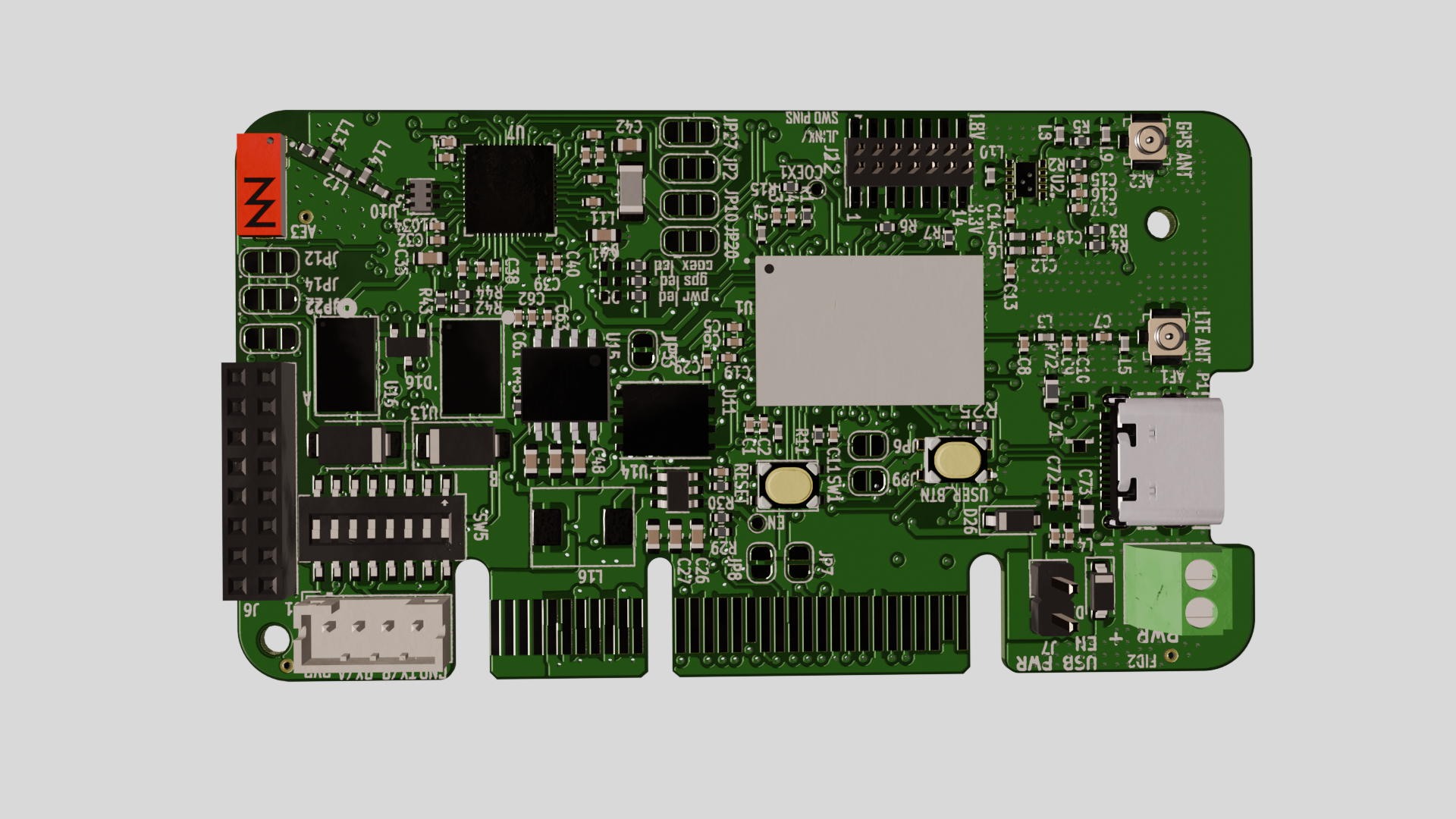
The solution is powered by a Network Interface Card (NIC) featuring Nordic’s nRF9151 low-power module, which has been purpose-built for DECT NR+ and cellular IoT applications
Excellent transmission power
With powerful transmission capabilities, the nRF9151 enables long-range communication, even in areas with weak signal conditions, with mesh networking for robust coverage and high receiver sensitivity for detecting distant signals. The nRF9151 surpasses its predecessor with support for Power Class 5 (20 dBm output power), alongside the existing Power Class 3 (23 dBm).
“Nordic Semiconductor’s and Wirepas’ proven expertise and technology enables us to deliver robust, scalable, and self-healing network connectivity for smart meters,” says Wamicha. During development, the nRF Connect SDK significantly streamlined development with its pre-built libraries, security features, and optimized communication protocols.
“This combined with Nordic’s strong technical support and reference designs, fast response times from application engineers, and reliable supply chain ensuring component availability, reduced our costs and accelerated time to market.”
Adopting the right technology can play a pivotal role in advancing smart energy transformation across key regions. It enables energy providers to deliver reliable performance and seamless connectivity, while allowing consumers to monitor and better understand their energy usage.
References
1. United Nations Sustainable Development Group: Decoding Africa’s Energy Journey: Three Key Numbers.
2. Africa Infrastructure Knowledge Program: Africa’s chronic power problems have escalated into a crisis affecting 30 countries. This tolls heavily on economic growth and productivity.